Supplementary Cementitious Materials Market Dynamics: Drivers, Challenges, and Regulatory Developments

The global construction and infrastructure sectors are witnessing continuous transformation as industries increasingly prioritize sustainable development and environmentally responsible building materials. Supplementary cementitious materials have become essential in modern concrete production because they improve durability, reduce carbon emissions, and enhance long-term structural performance. These materials are widely utilized across commercial buildings, transportation infrastructure, industrial projects, and residential developments because they support stronger and more sustainable construction practices. Rising urbanization, increasing infrastructure modernization, and expanding environmental awareness are significantly contributing to stronger adoption of supplementary cementitious materials worldwide. Manufacturers are also investing in innovative production technologies and advanced material engineering systems to improve efficiency and operational reliability.
The industrial infrastructure sector remains one of the strongest contributors to market demand. Supplementary cementitious materials are extensively utilized in manufacturing facilities, power plants, and industrial construction projects because they improve concrete stability and resistance to environmental stress. Increasing industrial expansion and infrastructure investments are encouraging broader market utilization globally.
According to a recent report by Market Research Future, the supplementary cementitious materials market is witnessing substantial expansion because of increasing demand for sustainable construction solutions, rising infrastructure development, and growing environmental regulations worldwide. Supplementary cementitious materials are widely incorporated into concrete systems because they improve strength, reduce permeability, and lower the environmental impact of cement manufacturing. Growing investments in green building technologies and advanced infrastructure systems are also contributing significantly to broader market development globally.
The residential construction industry is another important driver of market growth. Builders are increasingly utilizing supplementary cementitious materials in housing developments because they improve structural durability and support environmentally sustainable construction practices. Expanding urban housing projects and increasing demand for energy-efficient buildings are supporting stronger market utilization globally.
Experts reviewing the supplementary cementitious materials market Demand indicate that increasing infrastructure modernization, rising adoption of green construction technologies, and growing focus on carbon reduction are major factors supporting long-term market expansion. Advancements in material processing systems and improvements in concrete engineering are additionally helping manufacturers improve product quality and operational competitiveness.
Technological innovation continues to shape competitive market dynamics. Manufacturers are investing in advanced blending systems, automated production technologies, and sustainable raw material processing to maintain superior product standards and improve construction efficiency. Companies are additionally focusing on improving material consistency and reducing operational waste for infrastructure applications.
The transportation sector is also contributing strongly to market expansion. Supplementary cementitious materials are increasingly utilized in highways, airports, tunnels, and railway systems because they improve concrete durability and reduce long-term maintenance requirements. Growing investments in transportation infrastructure are encouraging broader industrial adoption worldwide.
Asia-Pacific remains one of the leading regional markets because of rapid urbanization, expanding industrial activities, and increasing infrastructure development investments. North America and Europe are also witnessing stable growth due to advanced construction technologies and strong environmental sustainability initiatives.
The future outlook for the industry remains highly promising as demand for durable infrastructure, sustainable construction materials, and environmentally responsible building technologies continues to rise globally.
Sponsored
Sponsored
Categories
Read More
The deicing fluid market is witnessing a paradigm shift, primarily driven by an increase in demand for sustainable solutions. Current estimates place the market size at around $3.34 billion in 2024, with expectations to soar to $5.78 billion by 2035, reflecting a robust CAGR of 5.64%. This growth is largely attributed to the escalating need for effective deicing fluids in aviation and road...

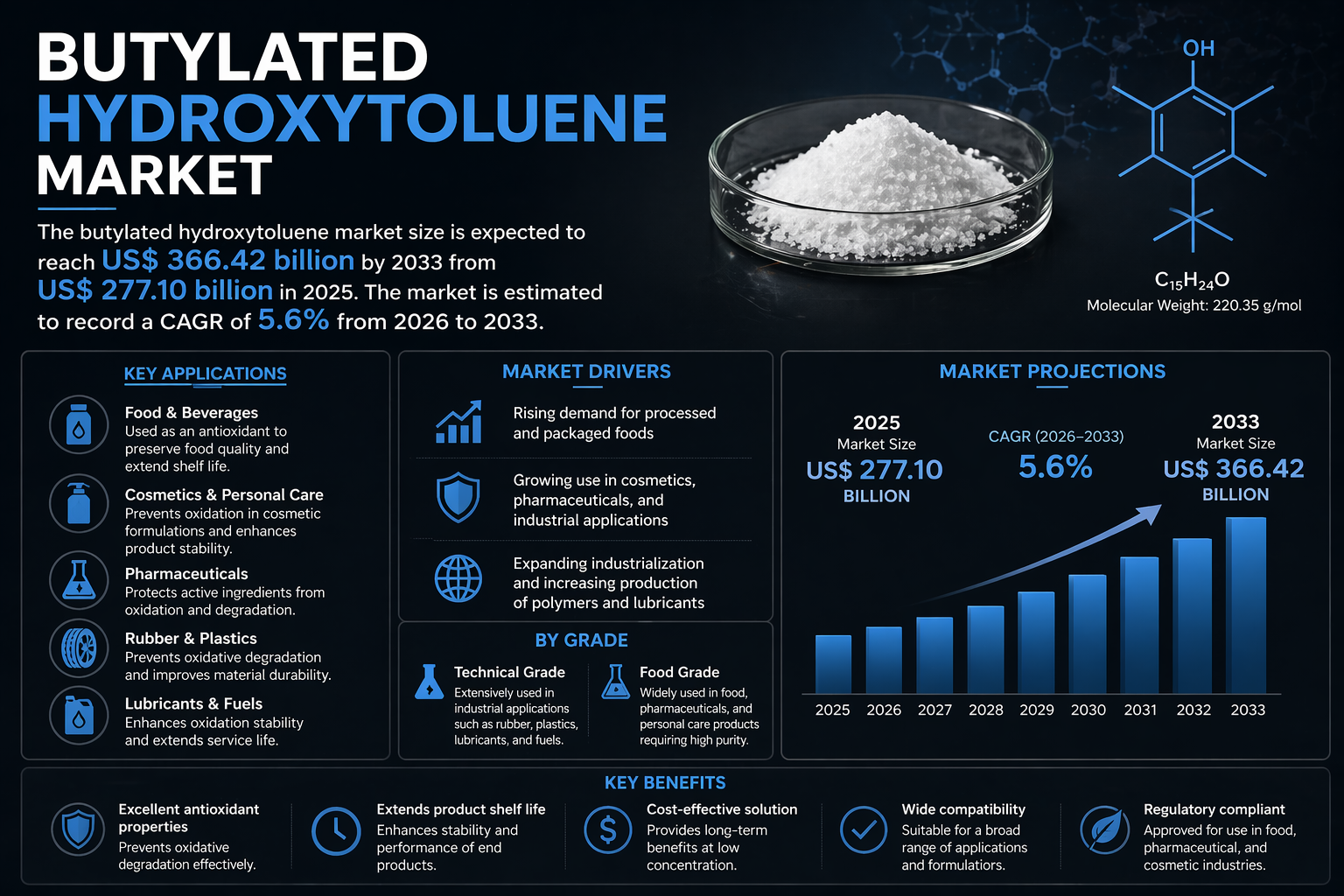
The global chemical industry is witnessing a significant transformation, driven by the increasing demand for high quality antioxidants in food preservation, fuel stability, and polymer manufacturing. At the heart of this evolution is Butylated Hydroxytoluene (BHT), a synthetic antioxidant widely valued for its ability to prevent oxidation and extend the shelf life of various products. As...