


ZhanBo Explains: How Can You Mitigate Quality Risks with a Chinese Diaphragm Pump Manufacturer
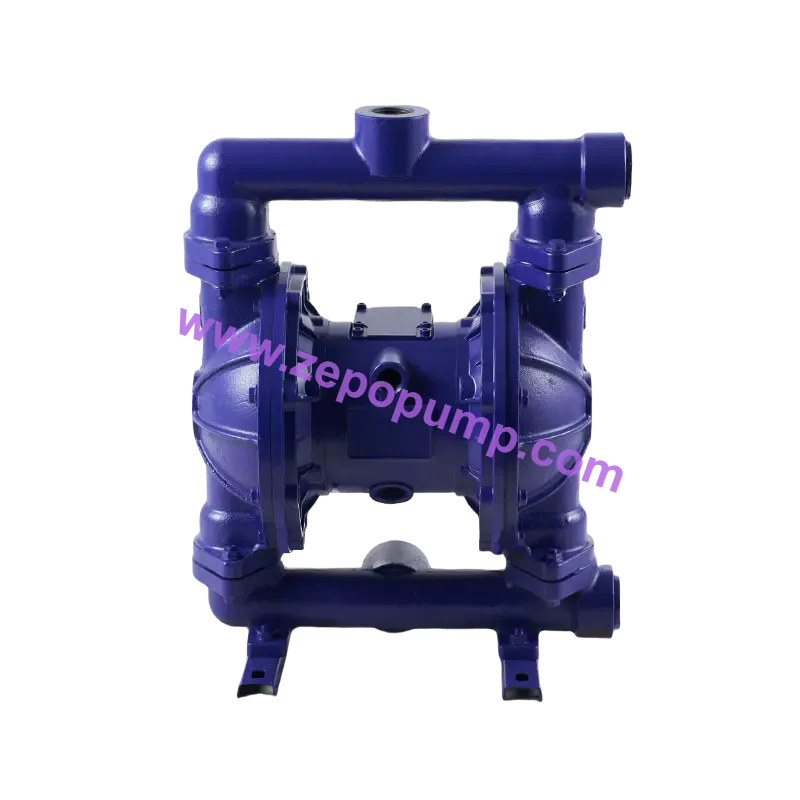
The procurement of industrial equipment from overseas suppliers presents a complex set of challenges and opportunities. Among the various product categories, diaphragm pumps hold a critical position in fluid handling across chemical, pharmaceutical, food processing, and wastewater treatment industries. Sourcing these pumps from a Chinese Diaphragm Pump Manufacturer has become increasingly common due to competitive pricing and manufacturing capability. However, this practice is not without its difficulties. A buyer must navigate quality variation, regulatory compliance, intellectual property concerns, logistics hurdles, and communication gaps. These risks can transform a cost-saving initiative into a costly operational problem. Zepopump, a professional manufacturer with deep roots in this sector, observes these challenges from both sides of the supply chain. What specific risks should a buyer anticipate, and what practical measures can reduce their impact?
The first risk area involves quality consistency. A Chinese Diaphragm Pump Manufacturer may produce excellent samples, yet struggle to maintain that standard across large-scale production. Variations in raw material quality, production processes, or worker skill can lead to batch-to-batch differences. A pump that performs well in one shipment may leak or lose efficiency in the next. This inconsistency affects the end-user's operations and damages the buyer's reputation. Mitigation requires a structured approach. Buyers should request a comprehensive quality assurance plan from the supplier. They should specify material certifications, dimensional tolerances, and performance test criteria. Regular factory audits, both announced and unannounced, provide visibility into the production environment. Third-party inspections during production, not just at the final stage, can catch issues early. The investment in these verification steps is minimal compared to the cost of field failures or replacement shipping.
Compliance with international standards presents another substantial risk. A Chinese Diaphragm Pump Manufacturer might hold certificates like ISO 9001 or CE marking, but the interpretation and enforcement of these standards may differ from the buyer's expectations. For example, pumps destined for the European market require ATEX certification for explosive atmospheres. Pumps for pharmaceutical applications need materials compliant with FDA regulations. Without specific, documented evidence of compliance, the shipment can be delayed at customs or rejected entirely. The financial and timeline consequences of such a rejection are severe. The mitigation strategy includes requesting copies of relevant certifications, with scope clearly stated, and verifying them with the issuing bodies. Buyers can also require material test reports and chemical compatibility declarations for each batch. Appointing a local agent or third-party compliance expert who understands both the source factory and the destination market's regulations can bridge this knowledge gap effectively.
Communication and cultural differences generate operational risks. Technical specifications may be misinterpreted due to language barriers or different engineering conventions. A drawing may indicate a dimension, but the manufacturer's interpretation of the allowable tolerance could be too wide. This misalignment results in parts that do not fit or perform as required. The time zone difference also slows response times for urgent queries. Mitigation relies on establishing clear, written specifications with unambiguous dimensions, materials, and performance data. Using international units and recognized industry standards reduces confusion. A detailed technical review meeting, with an interpreter if necessary, ensures mutual understanding before mass production. Maintaining a single point of contact within the supplier's organization improves accountability. For complex projects, a pre-production meeting at the factory can resolve many potential misunderstandings before they become costly errors.
Intellectual property (IP) protection constitutes a risk for buyers who have developed custom designs or proprietary materials. The Chinese legal system now offers stronger IP protection, but enforcement can be inconsistent. A manufacturer might use a buyer's design for other customers or even produce competitive products. This risk is particularly high for buyers who are new to the market or who work through trading companies. To mitigate, buyers should execute a non-disclosure agreement (NDA) and a supply agreement that explicitly addresses IP ownership and restrictions on use. Patents registered in China offer legal recourse, though it is a process that takes time. Separating critical components among multiple suppliers can also reduce the risk of complete design replication. Buyers should focus on building long-term, trust-based relationships with manufacturers who have a reputation for integrity, rather than treating each transaction as a one-off purchase.
Logistical risks in international shipping often surface. A pump may be damaged during sea freight due to inadequate packaging. The manufacturer's packaging standard for domestic shipments may not withstand the rigors of ocean transport. Customs clearance issues may arise if the documentation, such as commercial invoices or bills of lading, contains errors. Delays from these causes halt projects and increase costs. The buyer should specify packaging standards that meet international shipping requirements. They should require photos of packed goods before shipping. Using a freight forwarder with experience in Chinese exports helps manage documentation and customs procedures. Including a provision in the purchase agreement that defines clear Incoterms and allocates responsibility for specific shipping risks clarifies each party's obligations.
Payment terms present a financial risk. Chinese suppliers often request a deposit upfront to cover raw material costs. This exposure leaves the buyer vulnerable if the manufacturer fails to deliver or shuts down. A balance must be struck between the supplier's need for security and the buyer's need for protection. Payment by irrevocable letter of credit (L/C) provides security for both parties. For smaller orders, staggered payments tied to milestones, such as raw material delivery, production completion, and loading, offer a middle ground. Buyers should also verify the manufacturer's business license and financial standing through a credit report. The cost of due diligence is negligible compared to the potential loss of a prepayment.
Finally, reliance on a single Chinese Diaphragm Pump Manufacturer poses a supply-chain risk. Over-dependence creates vulnerability to factory fires, labor disputes, or changes in trade policy, such as new tariffs. A buyer should assess the supplier's business continuity plan. They should also qualify a secondary or alternative source, even if it means paying a premium for smaller initial volumes. Geographic diversification, such as sourcing from multiple provinces in China or from other countries, adds further resilience. The buyer who anticipates these risks builds a robust procurement system that can absorb disruptions. The selection of a reliable manufacturing partner, backed by clear agreements and independent verification, remains the bedrock of a successful sourcing strategy. To explore specific product categories and develop a risk-managed procurement plan, you may review available technical documentation and service capabilities at https://www.zepopump.com/product/, where application-specific guidance supports informed supplier evaluation. The complexity of international sourcing demands a systematic approach to risk identification and mitigation. Does your current procurement process adequately address these challenges when engaging with manufacturers in China?
Sponsorizzato
Sponsorizzato
Categorie
Altri Articoli
Modern fluid control systems are increasingly focused on improving energy efficiency, operational stability, and intelligent automation capabilities. In applications where reliable switching and reduced energy consumption are important, the Bi Stable Solenoid Valve provides an advanced solution through magnetic control technology that maintains switching positions without continuous electrical...
In today’s interconnected industrial environment, packaging plays an essential role in protecting products and supporting efficient supply chains. A Polypropylene Sacks Manufacturer provides businesses with reliable packaging solutions that are widely applied in agriculture, construction, logistics, and manufacturing industries. These products help companies improve transportation...
